
Radial vs bias ply tractor tires: A complete technical comparison covering traction, fuel savings, lifespan, and application scenarios. Make an informed choice for your agricultural equipment.
I. Introduction
When selecting agricultural equipment, operators typically focus on core specifications such as engine horsepower, transmission gears, and cab comfort. However, as the only contact point between the machine and the ground, tires directly influence traction efficiency, fuel economy, and soil structure. The condition of tires directly affects work efficiency, fuel consumption, and operating safety. Choosing the right tires improves work performance, reduces operating costs, and minimizes soil compaction; poor choices may lead to insufficient traction, increased fuel consumption, and premature tire wear.
Currently, agricultural tires are mainly divided into two categories: conventional bias ply tires and modern radial ag tires. There are significant differences between the two in structural design, performance characteristics, and application scenarios. This article will analyze the structural features and technical differences of these two tire types, and provide reference for tire selection based on actual working conditions.
II. Radial vs Bias Ply Tractor Tires Technical Analysis
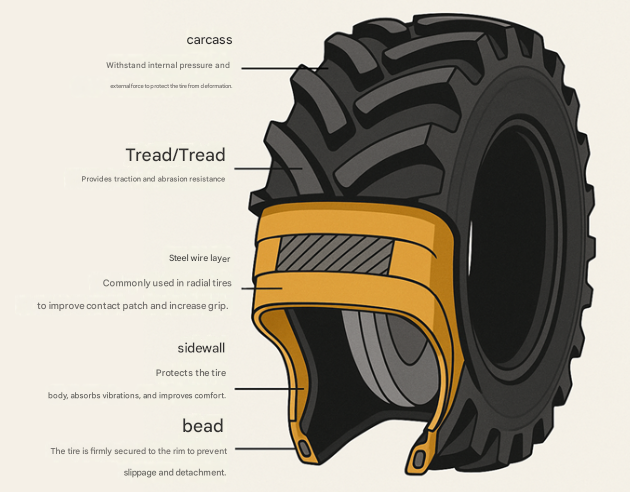
Understanding the performance differences between the two tire types begins with their structures. Agricultural tires mainly consist of carcass, tread, belt, sidewall, and bead. The design and combination of these components determine the overall performance characteristics of the tire.
A. Main Structural Components of Agricultural Tires
Carcass: The skeleton of the tire, composed of multiple layers of cords, determining strength and fatigue resistance.
Tread: The part in direct contact with the ground, providing traction and wear resistance.
Belt: Located between the tread and carcass, providing cushioning and reinforcement (a key component of radial tires).
Sidewall: Protects the carcass, withstands flexural deformation, and displays tire specifications and pressure information.
Bead: Secures the tire to the rim.
B. Core Differences: Bias vs. Radial Agricultural Tire
Based on the above structures, bias ply tires and agricultural radial tires differ fundamentally in cord arrangement and carcass geometry.
1. Bias Ply Tires
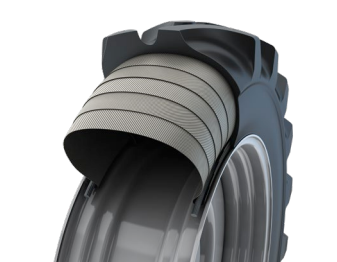
Structural Characteristics: Carcass cords are arranged diagonally, forming a crisscross network. The carcass has relatively high overall rigidity, with sidewall and tread hardness being consistent.
Geometric Characteristics: The carcass cross-section is circular, forming a small elliptical contact patch. Some bias ply tires have an additional belt layer in the tread area for enhanced protection.
Performance Characteristics: High sidewall rigidity, good load capacity, but higher rolling resistance and relatively poor cushioning performance.
2. Radial Tires
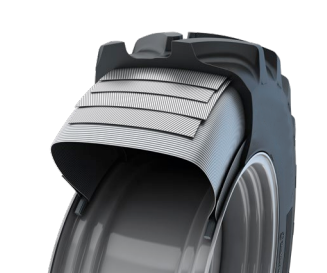
Structural Characteristics: Carcass cords are arranged radially (from bead to tread), forming a more flexible carcass. A high-strength belt layer (typically steel) covers the carcass, consisting of multiple cross-direction cord layers.
Geometric Characteristics: The carcass cross-section is more square compared to bias tires, forming a larger, nearly rectangular contact patch. The highly flexible sidewall allows the belt to work smoothly, requiring less force to form the contact patch, thereby reducing rolling resistance.
Performance Characteristics: Flexible carcass with a firm tread, large and optimally shaped contact patch, low rolling resistance.
The difference between radial tires and bias ply agricultural tires is most evident in their contact patch shape and rolling resistance – radial tires provide a larger, more rectangular footprint while requiring less energy to deform.
III. Comprehensive Comparison: Seven Key Dimensions
| Dimension | Bias Ply Tires | Radial Tractor Tires | Practical Impact |
|---|---|---|---|
| 1. Traction | Moderate, prone to slipping | Excellent, large and uniform contact patch | Radial tires have clear traction advantage in wet or soft soil |
| 2. Soil Compaction | Higher pressure, uneven pressure distribution | Uniform pressure, good carcass deformation | Radial tires reduce soil compaction, beneficial for long-term soil health |
| 3. Ride Comfort | Strong vibration, especially on hard roads | Good shock absorption, absorbs road impact | Radial tires reduce operator fatigue, protect chassis and axles |
| 4. Wear Resistance & Lifespan | Faster wear during high-speed or long-distance transport | More wear-resistant, stable tread, low heat generation | Radial tires offer lower lifecycle cost, 30%-50% longer lifespan |
| 5. Self-Cleaning | Tread grooves easily clogged with mud | Good tread deformation, strong self-cleaning ability | Radial tires regain traction faster in muddy conditions |
| 6. Initial Price | Lower | Higher (approximately 20%-40% more) | Lower short-term investment vs. higher long-term return |
| 7. Rolling Resistance | Higher | Lower | Radial ag tires provide better fuel economy, significant long-term fuel cost advantage |
IV. Application-Based Selection Recommendations
Radial Tractor Tire – Recommended for:
High-speed and frequent transport: Tractors, combines that frequently switch between fields and roads
Comprehensive efficiency pursuit: Fuel savings, reduced replacement frequency, improved ride comfort
Soil protection focus: Large-scale farming operations sensitive to soil compaction
Large equipment: 200+ HP tractors and combines where radial tires fully demonstrate their advantages
Bias Ply Tractor Tires – Recommended for:
Heavy loads and harsh field conditions: Rough terrain, heavy clay soil, frequent heavy tillage operations
Durability and repairability priority: Users who value puncture resistance and ease of repair
Budget-sensitive operations: Initial cost priority, lower concern for comfort and fuel consumption
Older equipment compatibility: Some older machines have lower rim requirements that bias tires meet more easily
When evaluating options, understanding the difference between radial tires and bias ply agricultural tires helps match the tire to specific operational demands.
V. Common Misconceptions
Misconception 1: "Radial ag tires sidewalls are soft, so they must not be pressure-resistant."
Clarification: The flexibility of radial tires is in the sidewall, designed to absorb impact and allow smooth belt operation. The actual load-bearing core is the steel belt, which has extremely high strength. Under low-speed, heavy-load conditions, radial tractor tires often have load capacity equal to or better than same-size bias tires.
Misconception 2: "Bias ag tires are cheaper, so replacing them more often doesn't matter."
Clarification: Calculate "cost per acre" rather than "cost per tire." Radial ag tires save 5%-10% on fuel and last 30%-50% longer. For operations exceeding 1,000 acres per year, fuel savings and extended lifespan will cover the initial price difference.
Misconception 3: "Radial and bias tires can be mixed on the same axle."
Clarification: Absolutely not. The two tire types have completely different rolling radii and deformation characteristics. Mixing them causes pulling, abnormal wear of the four-wheel drive system, and even transmission damage – repair costs far exceed the tire price difference.
Misconception 4: "Higher tire pressure is always better."
Clarification: Excessive pressure is harmful: it reduces contact patch area, lowers traction, increases soil compaction, and causes abnormal center tread wear. Correct pressure should be adjusted dynamically based on load and working conditions.
VII. KUNLUN Agricultural Radial Tire Recommendations
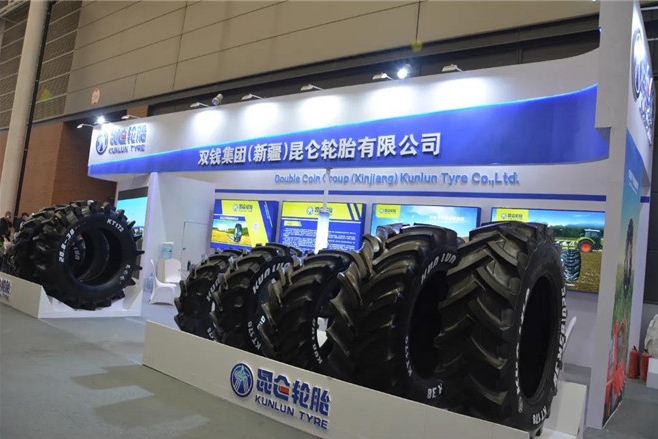
Based on the technical comparison above, KUNLUN offers premium agricultural radial tire solutions for different operational needs.
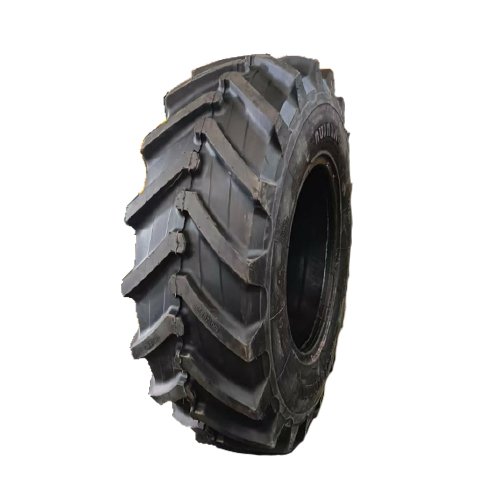
Key Features:
Unique R4 tread pattern for strong grip and self-cleaning
Excellent puncture resistance for harsh field conditions
High wear resistance for extended service life
Available Specifications: 400/70R20, 500/70R24, 540/70R24, 340/80R20
Recommended Applications: Compact tractors, small loaders, mixed-use farming operations requiring durability and traction
.png.webp "Radial vs Bias Ply Tractor Tires: Performance, Fuel Economy, and Selection Tips 8")
Key Advantages:
Reduces fuel consumption and soil compaction
Prevents slipping in wet or challenging field conditions
Higher traction performance for improved efficiency
Long tire life with high work efficiency
Novel tread pattern for puncture resistance, wear resistance, and block-out resistance
Available Specifications: 540/65R28, 540/65R30, 600/65R38, 650/65R38, 650/65R42, IF800/65R32 CFO, 260/70R16, VF265/70R15.3, 280/70R16, 280/70R18, 280/70R20, 320/70R20, 15R24, 380/70R24, 480/70R24, 360/70R28, 380/70R28, 600/70R28, 600/70R30, 520/70R38, 710/70R38, IF800/70R38, 580/70R42, IF710/70R42, 620/75R26, 620/75R34, 300/80R15.3, 440/80R28, 480/80R38, IF580/80R34, 280/85R20, 320/85R24, 340/85R24, 380/85R24, 380/85R28, 380/85R30, 420/85R24, 420/85R28, 420/85R30, 420/85R34, 460/85R30, 460/85R38, 520/85R38, 520/85R42, IF520/85R42, 650/85R38, 420/90R30
Recommended Applications: Low-speed, short-distance agricultural operations; tractors that frequently switch between field work and road transport; large-scale farming requiring fuel efficiency and soil protection
VI. Conclusion
Bias tires offer robust construction, easy repairability, and lower initial cost – suitable for heavy loads, harsh field conditions, and budget-sensitive operations. Agricultural radial tires provide low rolling resistance, larger contact patches, better fuel economy, and longer service life – ideal for frequent transport, large-scale farming, and long-term efficiency.
Neither type is absolutely superior. The right choice depends on your specific working conditions, including operation type, annual acreage, and long-term operating costs.
The difference between radial tires and bias ply agricultural tires comes down to matching the tire to the task. Choose wisely to balance efficiency and cost.


