
I. Introduction
For any agricultural operation—whether a small family farm or a large commercial enterprise—the selection of farm tractor tires represents a critical equipment decision that directly affects machinery efficiency, fuel consumption, soil health, and overall profitability. Given the diversity of field conditions and equipment types, understanding the key factors in tire selection is essential for optimizing performance and maximizing return on investment.
This article presents a structured framework organized around four dimensions: tread pattern classification, operating environment adaptation, tire construction selection, and width and diameter configuration.
II. Tractor Tire Tread Patterns: Tailoring Traction to Terrain
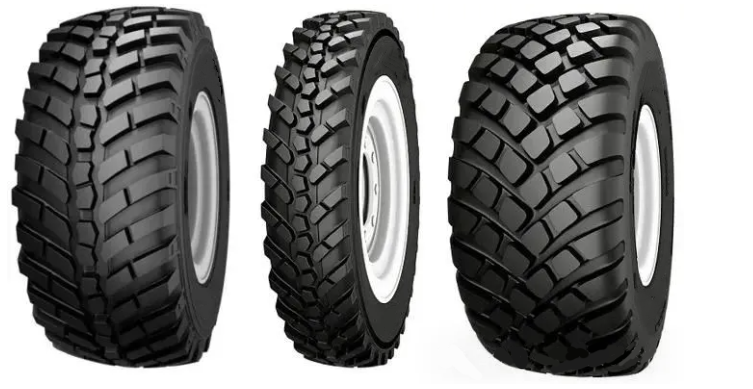
The tread pattern is the first determinant of traction and flotation. Selecting the wrong tractor tire tread patterns can result in costly downtime, even on a powerful tractor. Below are five mainstream tread types and their ideal applications:
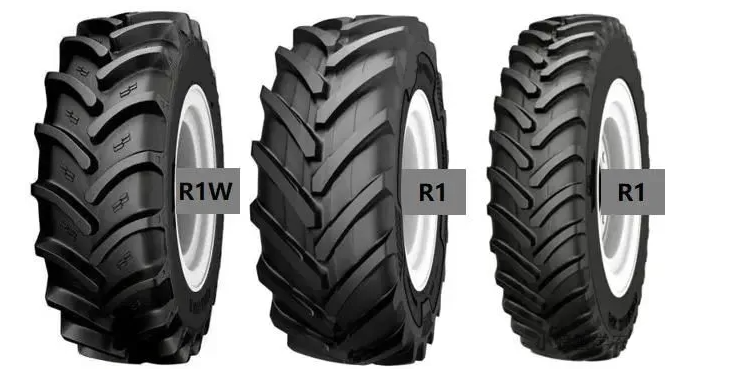
1. R-1 / R-1W (Standard and Deep-Tread)
These are the most commonly used tractor tire tread patterns, with lug angles ranging from 23 to 45 degrees. The deep, angled lugs provide excellent traction and self-cleaning capability in most row crops such as corn, soybeans, and wheat. The R-1W variant, where "W" denotes wet conditions, features a lug height 20% greater than standard R-1, making it particularly effective in moist, muddy, or poorly drained fields by reducing slippage and the risk of getting stuck.
2. R-2 (Paddy / Deep-Tread)
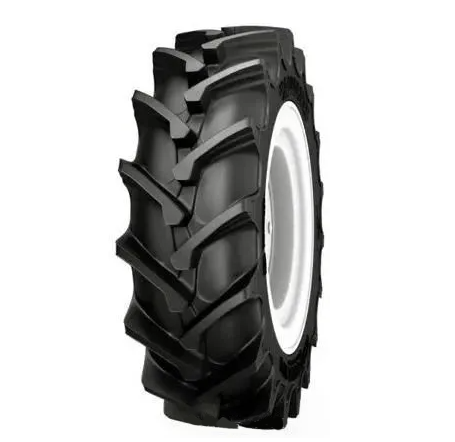
R-2 treads resemble R-1 in shape but differ fundamentally in depth—the lug height is at least twice that of R-1. This design makes R-2 the go-to solution for extreme wet conditions, including rice paddies, sugarcane fields, and persistently waterlogged areas. Where conventional treads would quickly fill with mud and lose grip, the deep, widely spaced lugs of R-2 penetrate through surface slush to reach firmer soil beneath, delivering sustained propulsion.
3. R-3 (Turf)
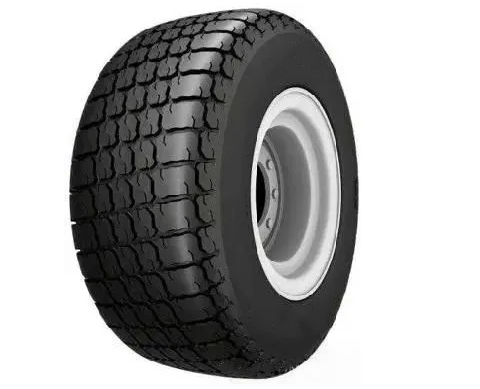
R-3 is designed for applications that demand minimal surface disturbance, such as dry grasslands, hayfields, golf courses, and turf maintenance. Its square or button-like profile allows the tire to "float" on the grass surface rather than cutting into the soil. This preserves root structure, prevents rutting and compaction, and meets the stringent surface integrity requirements of pastures and landscaped areas.
4. R-4 (Industrial)
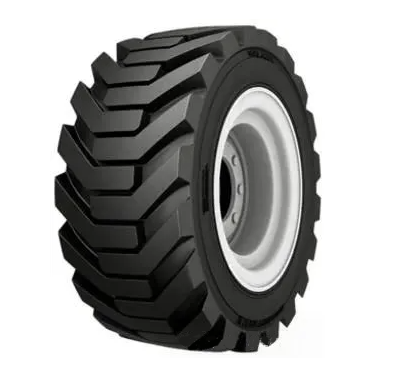
R-4 tires are commonly found on compact utility tractors, loaders, and job-site vehicles. With a lug height approximately 70% that of R-1, they are constructed from harder rubber compounds that deliver two key benefits: exceptional abrasion resistance on hard surfaces such as asphalt and concrete, extending service life, and sufficient traction for light off‑road work. If your equipment frequently travels between paved roads and soft fields, R-4 offers a pragmatic balance of durability and versatility.
5. Multi-Purpose Treads
For operations that face a wide range of conditions and require one machine to handle diverse tasks, multi-purpose treads merit consideration. These designs blend characteristics of R-1, R-3, and R-4 to achieve a balanced compromise among traction, wear resistance, and ground protection. While they may not outperform specialized tires in any single metric, they provide greater flexibility and overall value for small to mid‑sized farms with limited equipment.
III. Adapting to Operating Conditions: Dry Land vs. Paddy Fields
Matching agricultural tire selection to actual working conditions is essential for safe and efficient operation. The physical properties of soil differ fundamentally between dry land and paddy fields, demanding distinctly different tire designs.
Dry Land Operations: Flat Treads Preferred
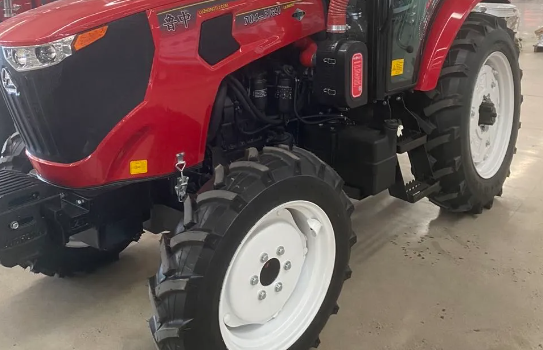
Dryland soils typically have good load-bearing capacity, with conditions ranging from dry to semi-dry or freshly tilled. In these scenarios, flat tread tires (represented by R-1 and its variants) are the standard choice. Their large, well-defined lugs provide excellent abrasion resistance while balancing traction and ride comfort. When traveling on hard surfaces, the ground pressure distribution of flat treads is more uniform, ensuring efficient power transfer without excessive compaction of the tilled layer.
- Paddy Field and Waterlogged Operations: Deep-Tread Specialists
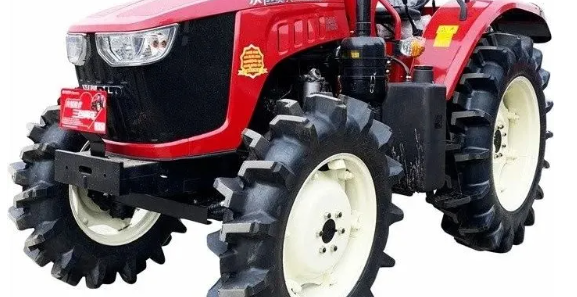
When faced with deep mud and high soil viscosity—common in rice paddies, sugarcane fields, or low-lying areas—deep-tread tires (R-2 and equivalent) are mandatory. These specialized tractor tire tread patterns deliver four critical advantages: high traction (deep lugs penetrate surface mud to grip firmer subsoil), superior self-cleaning (mud sheds easily, maintaining consistent grip), low slippage (reducing power loss and improving fuel efficiency), and enhanced puncture resistance (thickened base and deep lugs protect against crop stubble and debris). Deep-tread tires are purpose-built for wet conditions and should not be substituted with dry-land patterns.
IV. Radial vs. Bias: How Construction Affects Soil and Fuel Economy
Beyond tread pattern, tire construction—the internal "skeleton"—plays a pivotal role in performance and longevity. Two main types dominate: bias and radial.
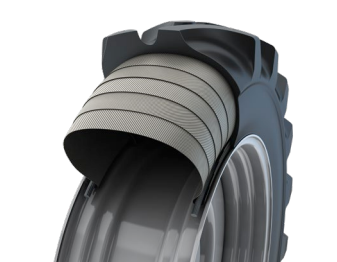
Bias Tires: The traditional technology, with multiple plies crossing at angles, resulting in a stiff sidewall and generally lower upfront cost. Trade‑offs include higher rolling resistance (meaning more fuel to move the tractor) and a smaller footprint that can increase localized soil compaction.
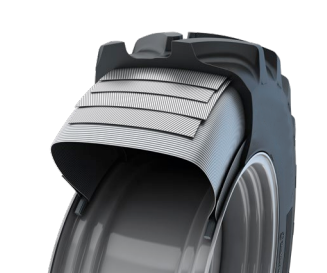
Radial Tractor Tire: Representing a major technological advance, radial tractor tire construction allows the sidewall and tread to work more independently, creating a larger, more uniform footprint. This yields three distinct benefits: improved traction, reduced soil compaction (critical for long‑term soil health and crop yields), and significantly lower rolling resistance—directly translating to measurable fuel savings. For the majority of modern agricultural operations, a radial tractor tire is the superior choice for performance and long‑term cost efficiency.
V. Proper Tire Configuration: The Engineering Trade-Offs of Width and Diameter
Even after selecting the appropriate tread and construction type, the specific tire dimensions on a given tractor model require careful engineering trade-offs based on operating environment. This decision directly affects traction efficiency, fuel consumption, and maneuverability.
Wide vs. Narrow Tires
Tire width is determined by the rim, and the tread width directly influences the balance between rolling resistance and grip.
Dry, Hard Ground: Narrow Tires
When a tractor operates mainly on dry, firm surfaces, rolling resistance becomes the primary factor in fuel consumption. Narrow tires have a smaller footprint, resulting in lower frictional drag and reduced rolling resistance, allowing more of the tractor's power to reach the ground. They also typically cost less upfront and consume less fuel over time—ideal for dryland transport and light-duty tasks.Soft, Wet Ground: Wide Tires
In soft, saturated, or uncompacted fields, the strategy reverses. Wide tires increase the ground contact area, reducing ground pressure (ballast) and minimizing vertical soil deformation. This lowers rolling resistance while improving traction. In general, wider tires deliver better grip and stability, especially on slopes or during operations with significant lateral loads. Wide tires are also key to protecting soil structure and preventing hardpan formation.
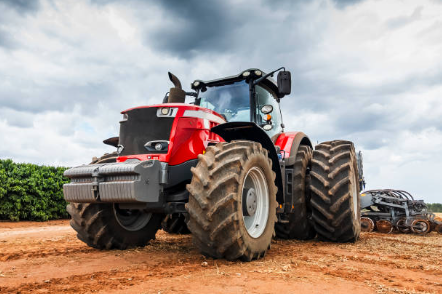
Large vs. Small Diameter
Tractors work in complex environments—soils may be loose or sticky, terrain smooth or rough. Diameter choice directly affects ground clearance, flotation, and maneuverability.
Advantages of Large Diameter: Larger agricultural tire increase the contact area, reducing ground pressure and preventing the tractor from sinking in soft fields. Greater diameter also means higher ground clearance—essential for tall crops (e.g., corn, sorghum) and uneven terrain. Adequate clearance also provides necessary crop headroom, minimizing plant damage during operations.
Advantages of Small Diameter: Smaller agricultural tire offer lighter, more responsive steering, reducing steering effort. Smaller front tires can significantly reduce the turning radius, enhancing maneuverability in confined spaces such as greenhouses, livestock barns, or loading zones. They also typically carry a lower purchase price, making them suitable for applications where agility is more critical than flotation.
VI. KUNLUN Farm Tractor Tires Recommendations
Since 1970, KUNLUN has established itself as a professional tire manufacturer, operating production bases in Urumqi and Korla with an annual capacity exceeding 2 million all-steel radial tires and 1.5 million agricultural, industrial, and off-the-road tires. As part of the Double Coin tire group, KUNLUN offers a comprehensive product portfolio spanning over 680 specifications, delivering reliable tire solutions for agricultural machinery, construction vehicles, and commercial transportation.
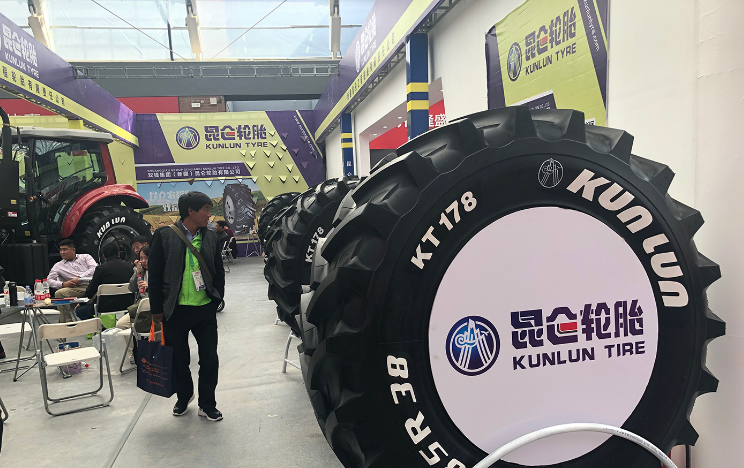
A. KUNLUN KT755 – Industrial-Grade Multi-Purpose Radial Tractor Tire
The KT755 is an R-4 radial tractor tire designed for multi‑purpose tractors, loaders, and job‑site vehicles that frequently transition between paved surfaces and soft ground. Its harder rubber compound and shallow, durable tread strike an ideal balance between abrasion resistance and light off‑road traction.
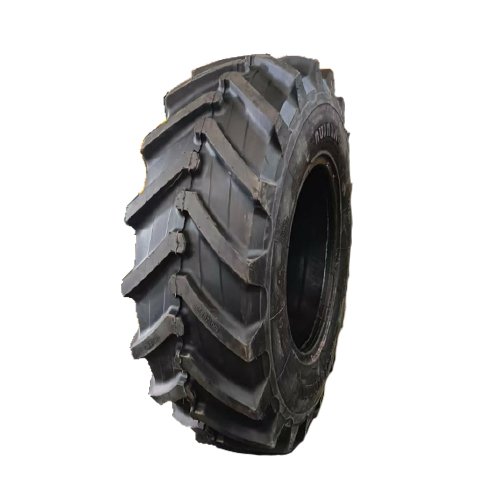
Key Advantages:
Lug depth at least twice that of standard R‑1 tires, designed for deep mud and high‑viscosity soils
Open lug configuration provides exceptional self‑cleaning, drastically reducing slippage
Radial tractor tire design optimizes footprint, reducing rolling resistance and improving fuel efficiency compared to traditional bias deep‑tread tires
Reinforced casing and thick base resist puncture from stubble and debris in demanding field conditions
Available Sizes:
420/85R30, 520/85R42
Recommended Applications:
Compact utility tractors and loaders; operations requiring frequent travel between paved roads and fields or job sites; farm transport with high wear resistance demands; mixed‑use environments where equipment versatility is prioritized.
B. KUNLUN KT176 – Specialized Radial Tractor Tire for Paddy Fields and Extreme Wet Conditions
The KT176 is an R‑2 deep‑tread radial tractor tire, purpose‑built for extreme wet conditions such as rice paddies, sugarcane fields, and waterlogged lowlands. Its ultra‑deep tread pattern, combined with radial construction, delivers performance beyond traditional bias deep‑tread tires.
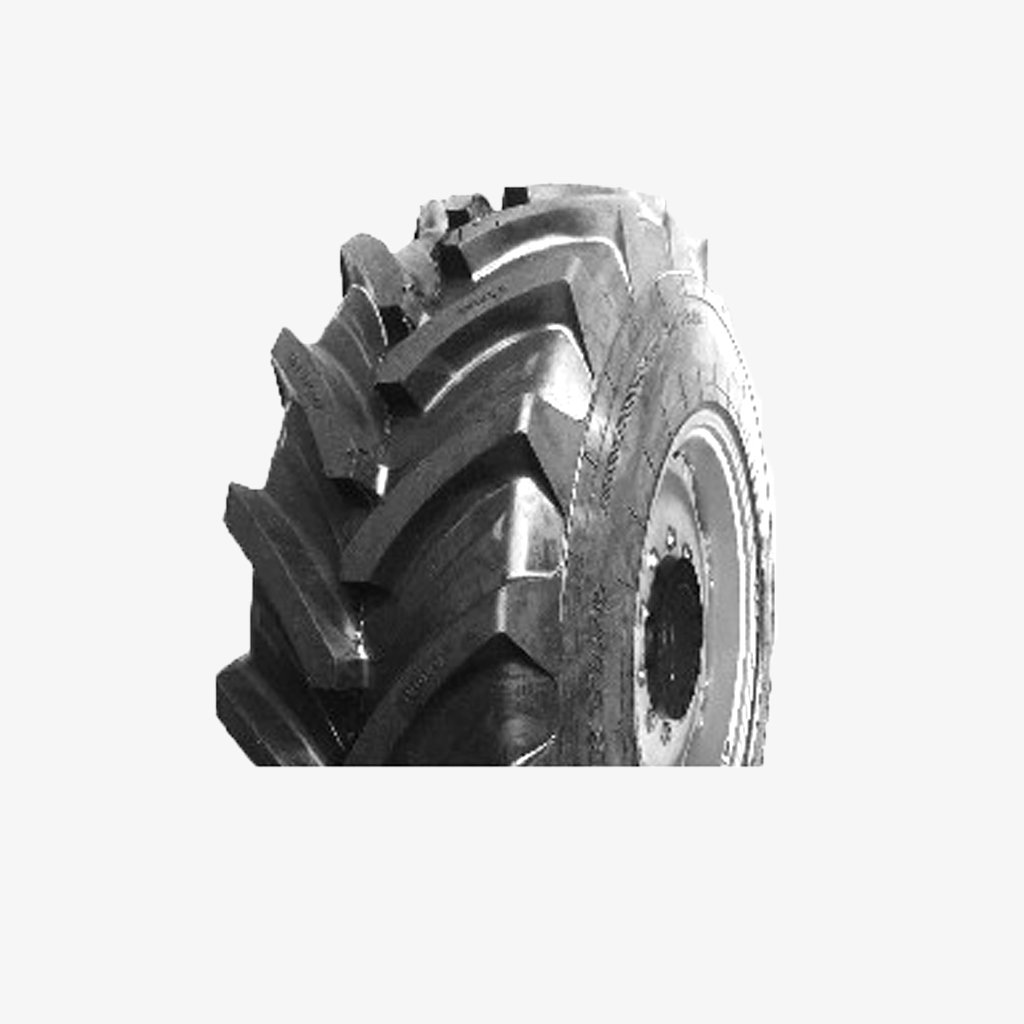
Key Advantages:
Lug depth at least twice that of standard R‑1 tires, designed for deep mud and high‑viscosity soils
Open lug configuration provides exceptional self‑cleaning, drastically reducing slippage
Radial tractor tire design optimizes footprint, reducing rolling resistance and improving fuel efficiency compared to traditional bias deep‑tread tires
Reinforced casing and thick base resist puncture from stubble and debris in demanding field conditions
Available Sizes:
420/85R30, 520/85R42
Recommended Applications:
Rice, sugarcane, and other paddy crops; persistently waterlogged fields; high‑viscosity soils with deep mud layers; large‑scale operations requiring superior traction, self‑cleaning, and fuel efficiency in wet conditions.
VII. Conclusion
Selecting the right agricultural tire requires a systematic assessment of operating environment, tread pattern, tire construction, and size configuration. For dry land, flat treads such as R-1 are appropriate; for paddy or waterlogged fields, deep-tread R-2 is essential. Radial tractor tire construction offers advantages in traction, fuel efficiency, and soil protection. Width and diameter should be selected based on ground conditions and maneuverability requirements. By applying these principles, investing in proven solutions such as the KUNLUN radial tractor tire series delivers reliable performance, fuel savings, and long-term soil productivity.


