
I. Introduction
Between 2025 and 2026, the global agricultural tire market is showing signs of slowing growth, yet the adoption of radial and smart tires continues to rise. At the same time, international brands like Michelin and Bridgestone are scaling back their agricultural tire operations, while Chinese manufacturers such as ZC Rubber and Guizhou Tire are expanding capacity and entering markets like Europe. Based on 2025-2026 market data and industry developments, this article examines the size, type segmentation, and regional characteristics of the global agricultural tire market, introduces major Chinese ag tire manufacturers and international brands, and provides procurement advice and trend forecasts.
II. Global Agricultural Tire Market Overview
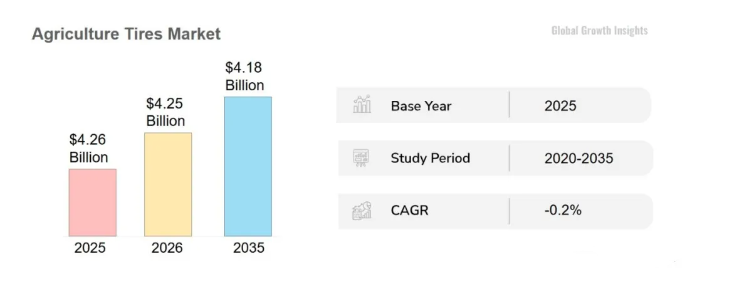
According to a commercial research firm report, the global agricultural tire market was valued at approximately USD 4.26 billion in 2025, USD 4.25 billion in 2026, USD 4.24 billion in 2027, and is expected to slow to USD 4.18 billion by 2035. Reasons for the slowdown include raw material price fluctuations, extended agricultural machinery replacement cycles, and economic pressures in some regions. However, agricultural mechanization (especially in Asia-Pacific and Africa), global food security demand, and user demand for durable, fuel-efficient, soil-friendly high-performance agricultural tires continue to support the market.
A. By Technology Type
Radial tires account for 68% of the global agricultural tire market, while bias tires account for 32%.
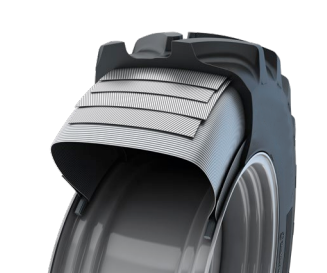
Radial tires: Improve soil protection by 35%, extend tire life by 30%, and increase fuel efficiency by 28%. Over 72% of high-tech farms in Europe and over 65% in North America use radial tires. Adoption of smart radial tires (with built-in sensors to monitor pressure and temperature) has increased by 38%, and 52% of new tractors now come factory-fitted with radial tires.
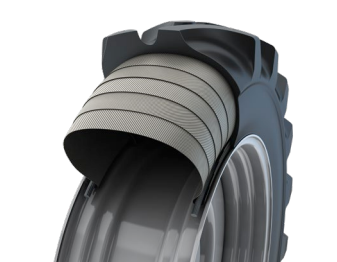
Bias tires: Global usage is declining. Over 54% of small and medium-sized farms still use bias tires. 41% of farms in Africa and 36% in South America continue to use bias tires for cost reasons.
Conclusion: For long-term total cost of ownership (fuel savings + soil protection + extended life), choose radial tires. For low-intensity, short-distance, low-speed operations with a limited budget, bias tires remain a practical option.
B. By Region
Asia-Pacific (38%): The world's largest agricultural tire market, with demand driven by mechanization projects, up 52%.
Europe (26%): Radial tire adoption is 73%, and bio-based materials account for over 49% of total tire production. Germany, France, and Italy together account for 61% of regional demand. Over 42% of tire sales are linked to government-subsidized eco-agriculture programs. Soil conservation regulations have driven a 39% increase in demand for low-pressure tires. Smart tire usage in precision farming has grown by 33%. EU regulations currently influence 57% of tire design updates, and over 50% of manufacturers are actively redesigning products to meet EU emissions and sustainability standards.
North America (22%): Smart agricultural tire usage increased by 44%.
Middle East & Africa (14%): Demand for low-cost tires has grown 37% over the past three years.
Global digital technology adoption exceeds 30%, and OEM demand in emerging regions has grown by 50%.
III. Major Chinese Ag Tire Manufacturers in 2026
A. Xuzhou Xulun Tire (Xulun)
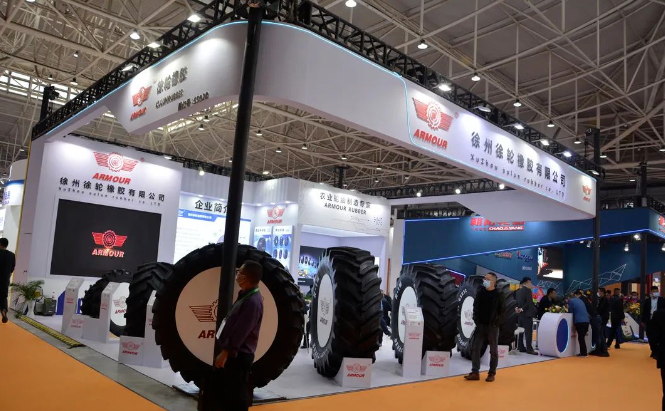
Xulun specializes in large off-the-road (OTR) tires, agricultural tires, and forklift tires, and is China's largest exporter of bias tires. It has a total production capacity of 4.2 million tires, including 1.8 million agricultural tires and 100,000 agricultural radial engineering tires. It has independently developed over 30 specifications of agricultural radial tires, covering diameters from 24 to 42 inches and aspect ratio series including 65, 70, 75, 80, and 85. Its "Jia" brand products have been named "Jiangsu Famous Brand Products" for 10 consecutive years.
Best for: Large-size bias agricultural tires, export-oriented applications.
B. ZC Rubber (Zhongce)
ZC Rubber produced its first "Chaoyang" brand agricultural tire in 1971. In recent years, its bias agricultural tire business has grown steadily, and in 2018 it began developing all-steel agricultural radial tires. Through the acquisition of Tianjin Tianli, it completed an 80,000-unit annual agricultural radial tire production line in February 2023. ZC Rubber is a significant participant in the European agricultural tire market, with products that meet EU market requirements.
Best for: Large-volume procurement, complete product lines, and the European market.
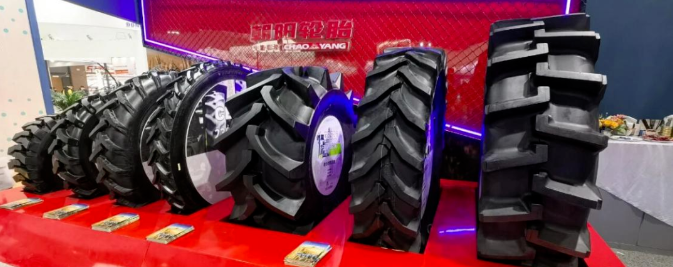
C. Guizhou Tire
Guizhou Tire was an early domestic producer of agricultural radial tires and offers one of the most complete product ranges. In 2021, it added 25,000 units of annual agricultural radial tire capacity through production line modifications, now reaching 50,000 units. Its OEM customers include: YTO Group, John Deere, AGCO, CNH Industrial, Zoomlion, Foton Lovol, Deutz-Fahr, Changzhou Dongfeng Farm Machinery, Jiangsu Yueda Intelligent, Wode Farm Machinery, China Railway Construction Heavy Industry, and Guangxi Liugong Farm Machinery.
Best for: OEM-quality requirements or replacement tires for the above brands.
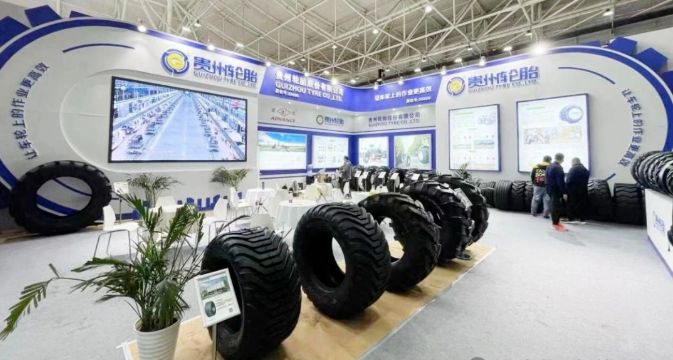
D. Linglong Tire
Linglong Tire has partnered with Lingong Agricultural Machinery to supply agricultural radial tires for the new 9E series hybrid agricultural tractor, which exceeds 600 horsepower.
Best for: Large, high-end, or hybrid agricultural machinery.
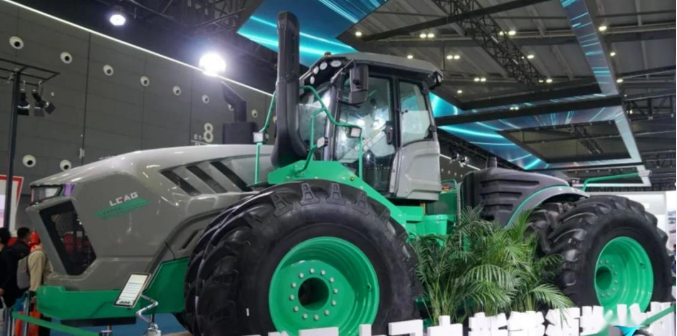
E. Xinjiang Kunlun
Xinjiang Kunlun (now Double Coin Group (Xinjiang) Kunlun Tire Co., Ltd.) is a major tire manufacturer in Northwest China, majority-owned (51%) by Double Coin Tire Ltd. It operates an all-steel radial tire production base in Urumqi and a bias tire production base in Korla, with an annual capacity of 1.15 million bias tires (including 150,000 OTR and large agricultural tires). Its products cover five series (engineering, agricultural, industrial, etc.) with over 150 specifications and 800 varieties. The "Kunlun" brand is a "Xinjiang Famous Brand Product" and holds CCC (China), DOT (USA), ECE (Europe) certifications, exporting to Southeast Asia and Central Asia.
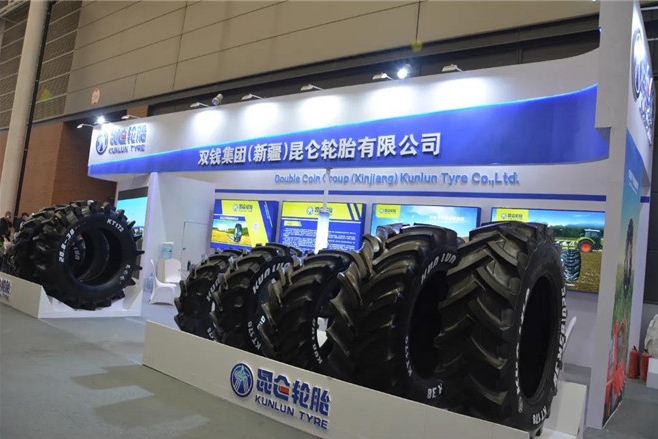
Best for: Northwest China and Central Asian markets, OTR and large agricultural machinery fitments, bias and wide-profile agricultural tire needs.
In addition, Sailun, Double Coin, Taishan, Wangyu, Qihang and other brands are continuing to develop in various agricultural tire sub-segments.
IV. International Brand Status: Strategic Contraction
Many international tire giants are scaling back their agricultural tire businesses, reallocating resources to specialty tires or aviation tires.
A. Continental
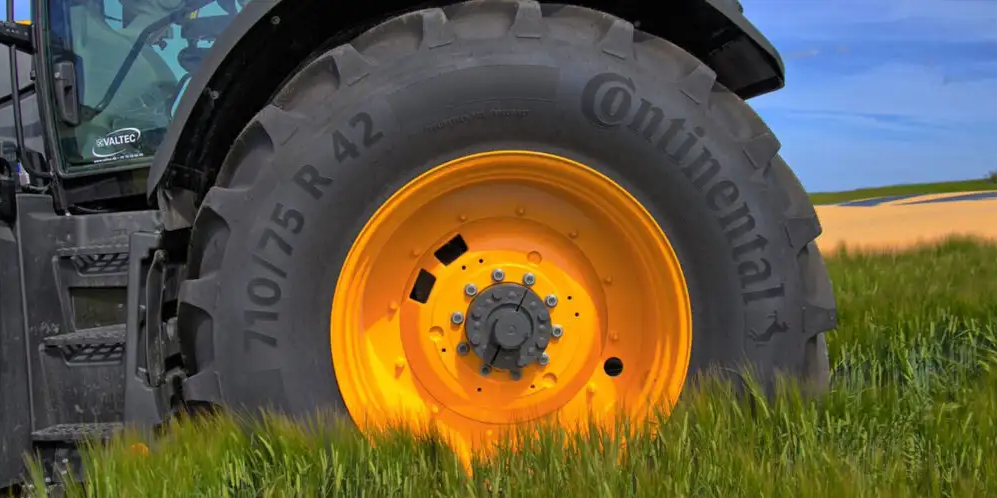
In April 2024, Continental announced plans to exit the agricultural tire business by year-end. This marks its second exit: it first sold the business to Czech CGS in 2004 (later acquired by Trelleborg in 2016 and then Yokohama in 2023), re-entered the market in 2016, and is now exiting again.
B. Titan International
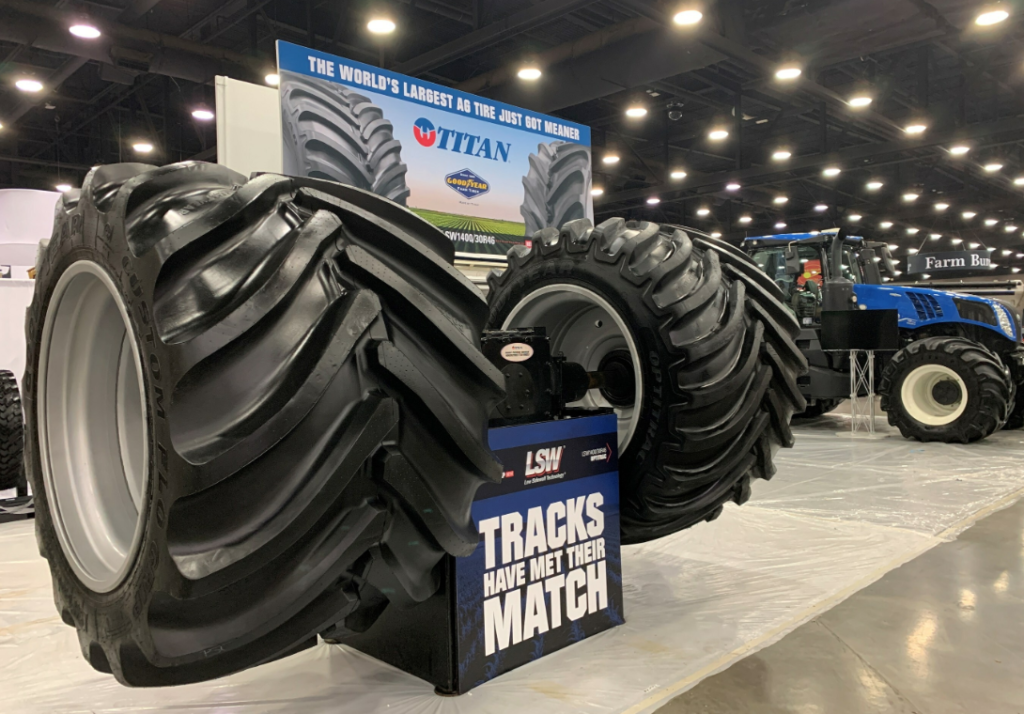
After acquiring OTR company Carlstar in 2024, Titan's sales grew only 1.3%, and it posted a net loss of USD 5.6 million — its worst performance in four years. In 2022, its operating profit was USD 205.8 million.
C. Goodyear
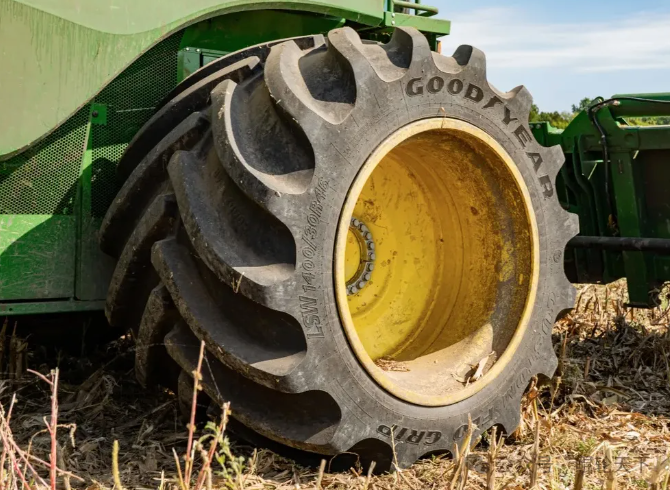
Goodyear's OTR business generated USD 678 million in sales in 2023, accounting for 4% of total tire revenue. In 2024, it sold the business to Yokohama for USD 905 million.
D. Michelin
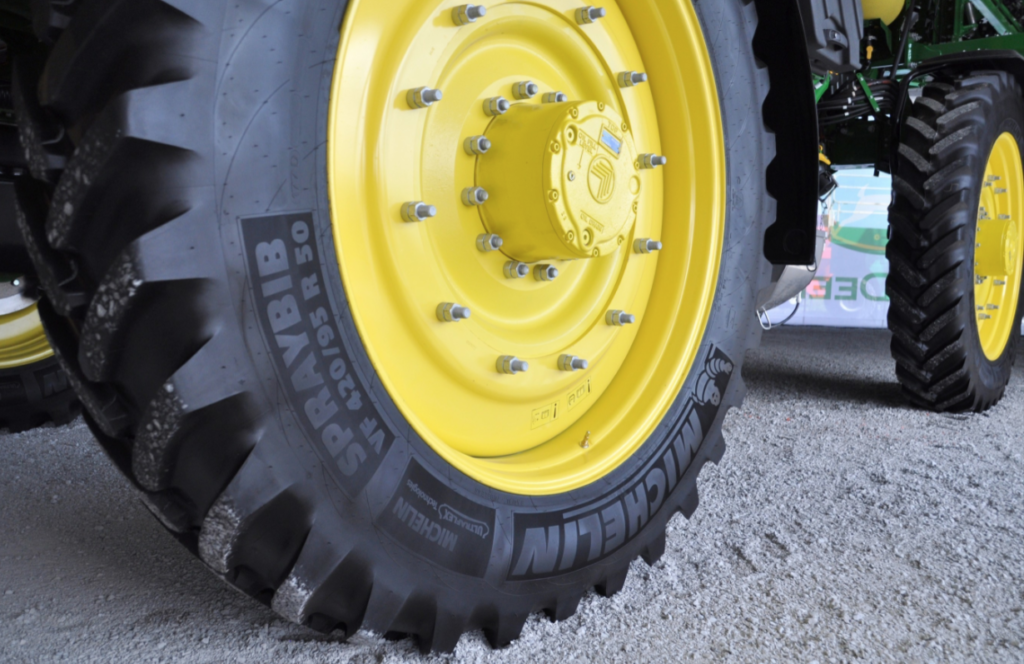
Michelin still holds over 15% of global agricultural tire production value. In 2024, its combined sales of industrial, construction, and agricultural tires fell 9.1% year-over-year, while operating profit dropped 23.5%.
E. Bridgestone
Bridgestone's agricultural tire sales fell 1%, and it announced capacity reductions at its Des Moines, Iowa agricultural tire plant.
F. Yokohama
After three consecutive years of acquiring global specialty tire businesses, Yokohama announced in late 2024 that it would close its specialty tire plant in Hadera, Israel, its off-highway tire plant in Prague, Czech Republic, and its agricultural tire plant in South Carolina, USA.
Conclusion: International giants are strategically contracting in the agricultural tire sector. Buyers may face risks of supply instability, price increases, or slower service response.
V. Procurement Recommendations
First, calculate total cost of ownership. Radial tires have an initial purchase cost 20-30% higher than bias tires, but offer 30% longer life and 28% better fuel efficiency. When annual operating hours are high, radial tires have a lower total cost.
Second, choose brands based on your target market. For exports to Europe, select brands with EU market experience and environmental compliance (e.g., ZC Rubber). For Asian, African, or Central Asian markets, brands like Xulun and Xinjiang Kunlun, which have export experience, are more suitable.
Third, assess service risks from international brand contraction. If your current fleet relies heavily on a brand that is scaling back, plan replacement alternatives in advance and consider Chinese brands as backups or replacements.
VI. Trends for the Next 3–5 Years in the Agricultural Tire Market
Looking beyond 2026, the agricultural tire market shows two trends:
First, adoption of smart tires will continue to rise. Smart radial tires that monitor pressure, temperature, and load in real time are gaining adoption. Global digital technology adoption currently exceeds 30%. When purchasing, prioritize products that include smart interfaces or have upgrade potential.
Second, environmental regulations will expand their reach. The EU currently influences 57% of tire design updates. New energy agricultural machinery subsidy policies in the US, Japan, and China are promoting low-rolling-resistance and recyclable materials. For export-oriented or long-term operations, make environmental compliance a hard criterion in supplier selection.
VII. Conclusion
The global agricultural tire market is slowing but shifting toward radial and smart tires. Chinese ag tire manufacturers are expanding, while international brands are contracting. Buyers should focus on total cost of ownership and environmental compliance.


